
By Jennifer Poindexter When you’re looking for ideas to brighten up your landscape, planting bulbs is a great option. There’s nothing like natural …
17 Top Bulbs for Fall Planting – for Blooms Next Spring
By Jennifer Poindexter When you’re looking for ideas to brighten up your landscape, planting bulbs is a great option. There’s nothing like natural …
17 Top Bulbs for Fall Planting – for Blooms Next Spring

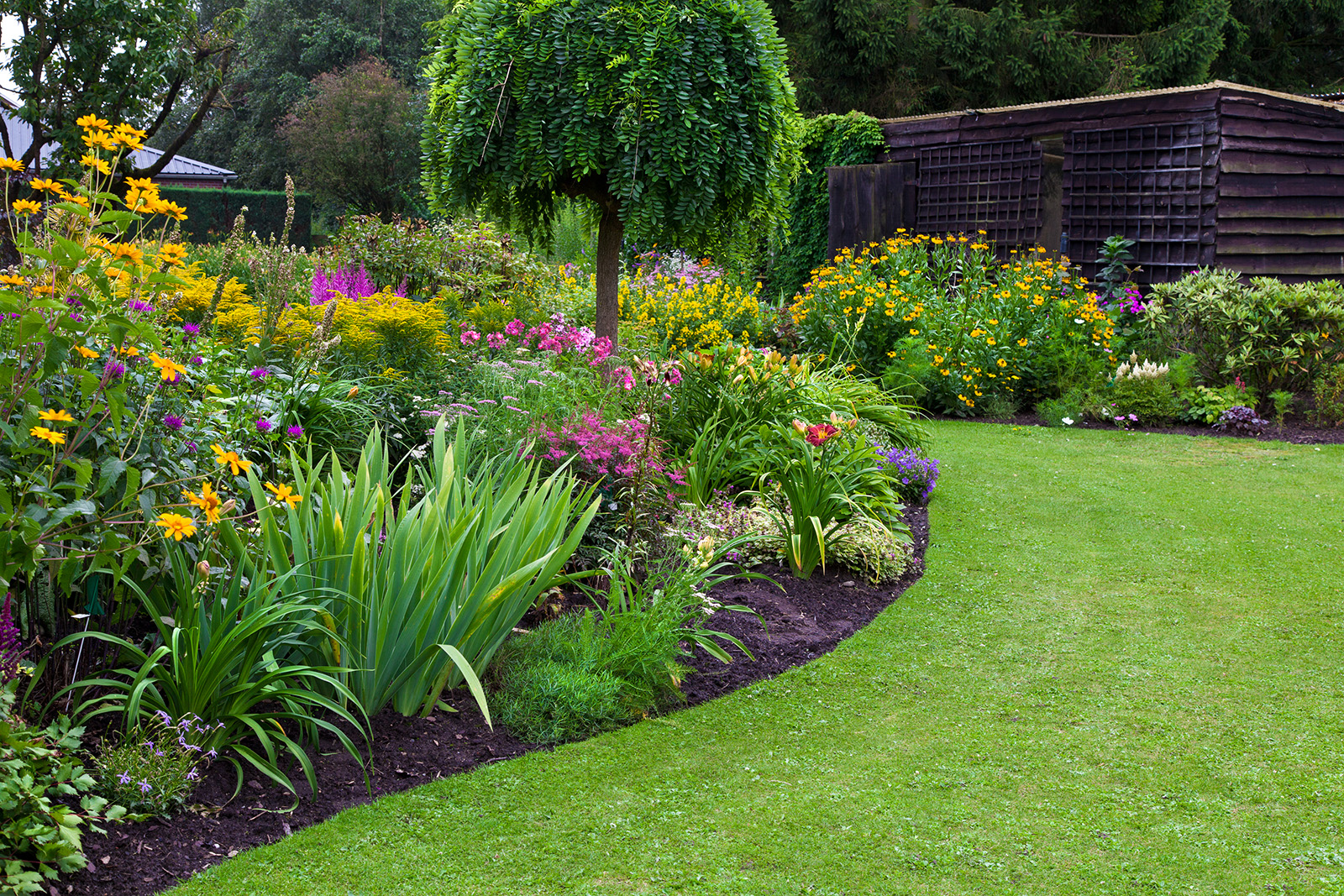
~ A well-manicured garden is a source of pride for any homeowner. It can be a beautiful addition to your property and can boost your home’s curb …
Keep Your Garden Neat And Tidy

Pollination Fast Facts: Gardeners

What is pollination?
• Pollination occurs when pollen grains are moved between two flowers of the same species, or within a single flower, by wind or animals that are pollinators. Successful pollination, which may require visits by multiple pollinators to a single flower, results in healthy fruit and fertile seeds, allowing plants to reproduce. Without pollinators, we simply wouldn’t have many crops!
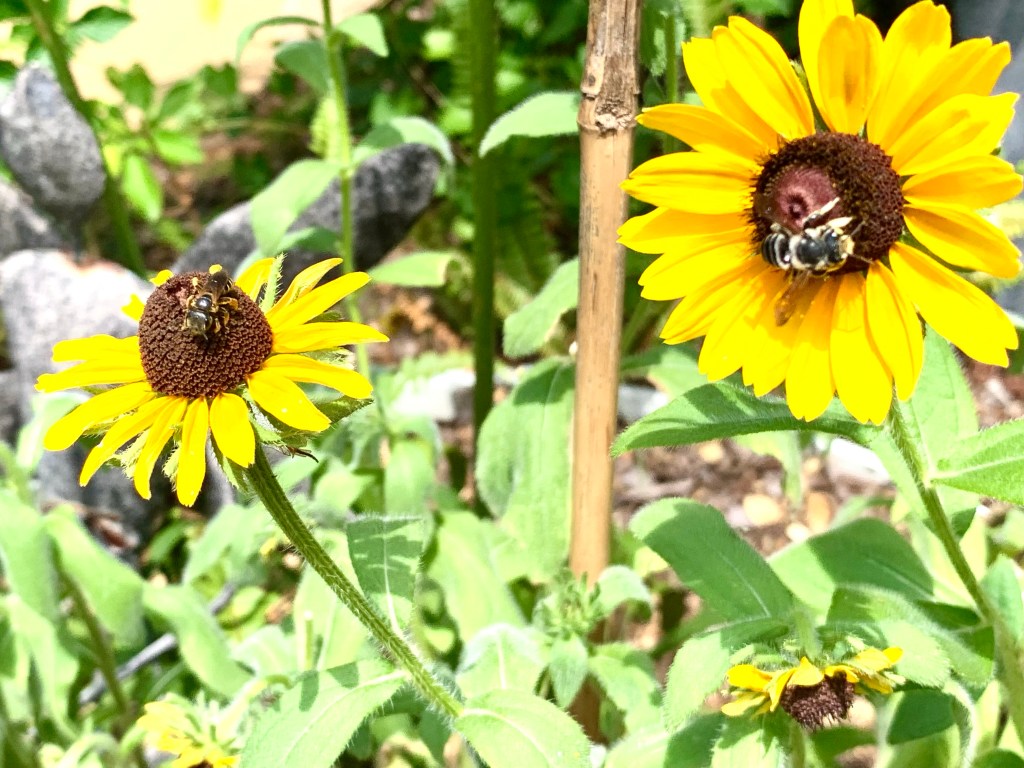
• About 75% of all flowering plants rely on animal pollinators and over 200,000 species of animals act as pollinators. Of those, about 1,000 are hummingbirds, bats, and small mammals. The rest are insects such as beetles, flies, bees, ants, wasps, butterflies, and moths.
Why are pollinators important to us?
• Worldwide, approximately 1,000 plants grown for food, beverages, fibers, spices, and medicines need to be pollinated by animals in order to produce the goods on which we depend.
• Foods and beverages produced with the help of pollinators include blueberries, chocolate, coffee, melons, peaches, pumpkins, vanilla, and almonds. Plants that depend on a single pollinator species, and likewise, pollinators that depend on a single type of plant for food are interdependent. If one disappears, so will the other.

What about bees that sting? What about allergies?
• Most species of bees don’t sting. Although all female bees are physically capable of stinging, most bee species native to the U.S. are “solitary bees,” that is, not living in colonies and don’t sting unless they are physically threatened or injured. Only honey bees are defensive and may chase someone who disturbs their hive.
• It is wise, though, to avoid disturbing any bee or insect nest. For instance, if you spot an underground nest of ground-nesting bees, you might want to mark it with a stick so that it can be easily avoided.
• Some people are allergic to pollen of various flowering trees, plants and grasses, but not to all pollen. A common misunderstanding is that hay fever is caused by goldenrod pollen. It isn’t! Ragweed is the main offender and should be avoided.
Pollinator Partnership 600 Montgomery Street, STE 440 San Francisco, CA 94111 415-362-1137
Ways You Can Help!
What everyone can do for pollinators:
• Watch for pollinators. Get connected with nature. Take a walk, experience the landscape and look for pollinators’ midday in sunny, planted areas.
• Reduce your impact. Reduce or eliminate your pesticide use, increase green spaces, and minimize urbanization. Pollution and climate change affect pollinators, too!
• Plant for pollinators. Create pollinator-friendly habitat with native flowering plants that supply pollinators with nectar, pollen, and homes.
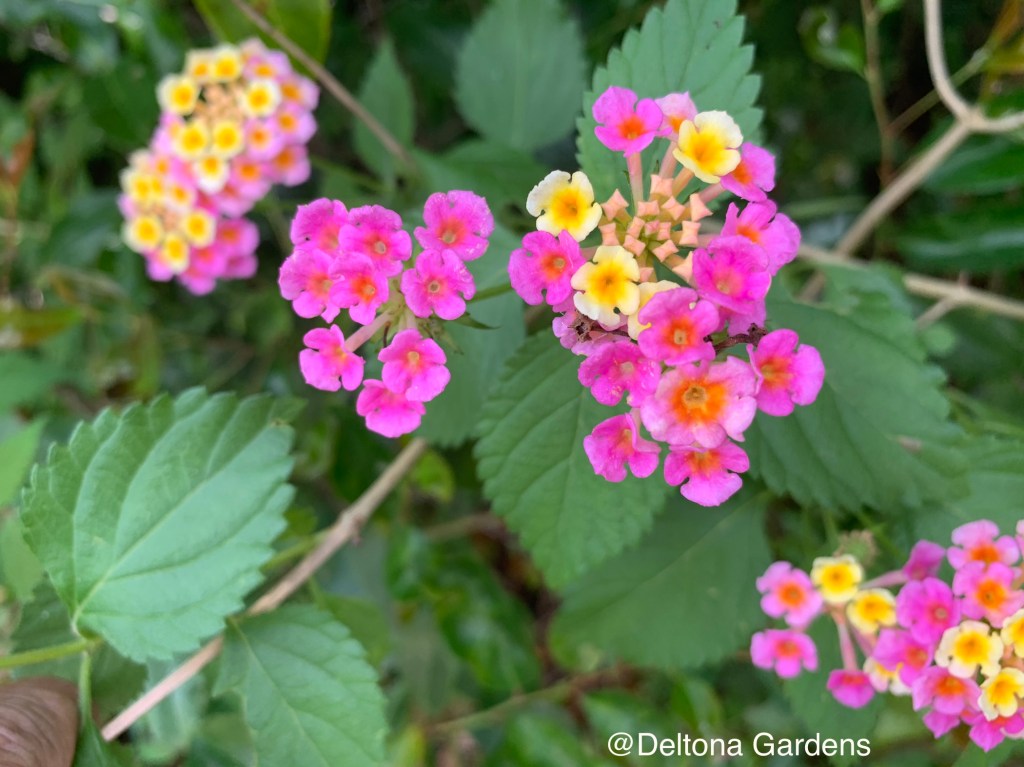
What you can do for pollinators:
• Create a pollinator-friendly garden habitat in just a few simple steps.
• Design your garden so that there is a continuous succession of plants flowering from spring through fall. Check for the species or cultivars best suited to your area and gradually replace lawn grass with flower beds.
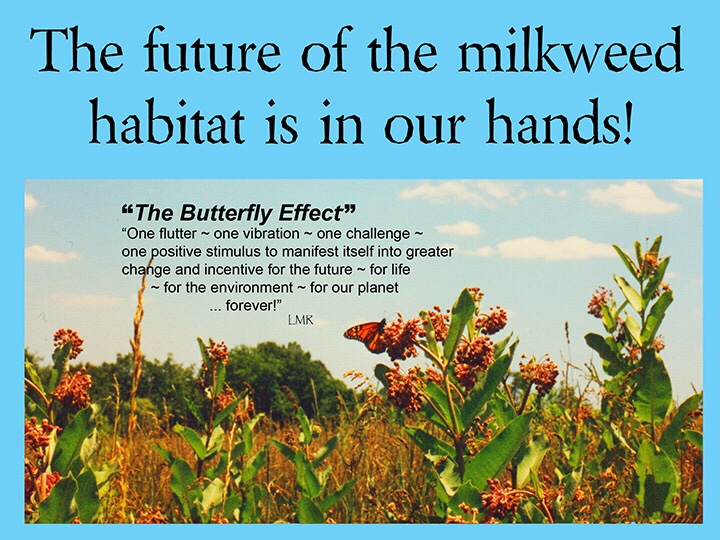
• Plant native to your region using plants that provide nectar for adults plus food for insect larvae, such as milkweed for monarchs. If you do use non-native plants, choose ones that don’t spread easily, since these could become invasive.
• Select old-fashioned varieties of flowers whenever possible because breeding has caused some modern blooms to lose their fragrance and/or the nectar/pollen needed to attract and feed pollinators.
• Install ‘houses’ for bats and native bees. For example, use wood blocks with holes or small open patches of mud. As little as 12” across is sufficient for some bees.
• Avoid pesticides, even so-called “natural” ones such as Bacillus thuringiensis (Bt). If you must use them, use the most selective and least toxic ones and apply them at night when most pollinators aren’t active.
• Supply water for all wildlife. A dripping faucet or a suspended milk carton with a pinhole in the bottom is sufficient for some insects. Other wildlife need a small container of water.
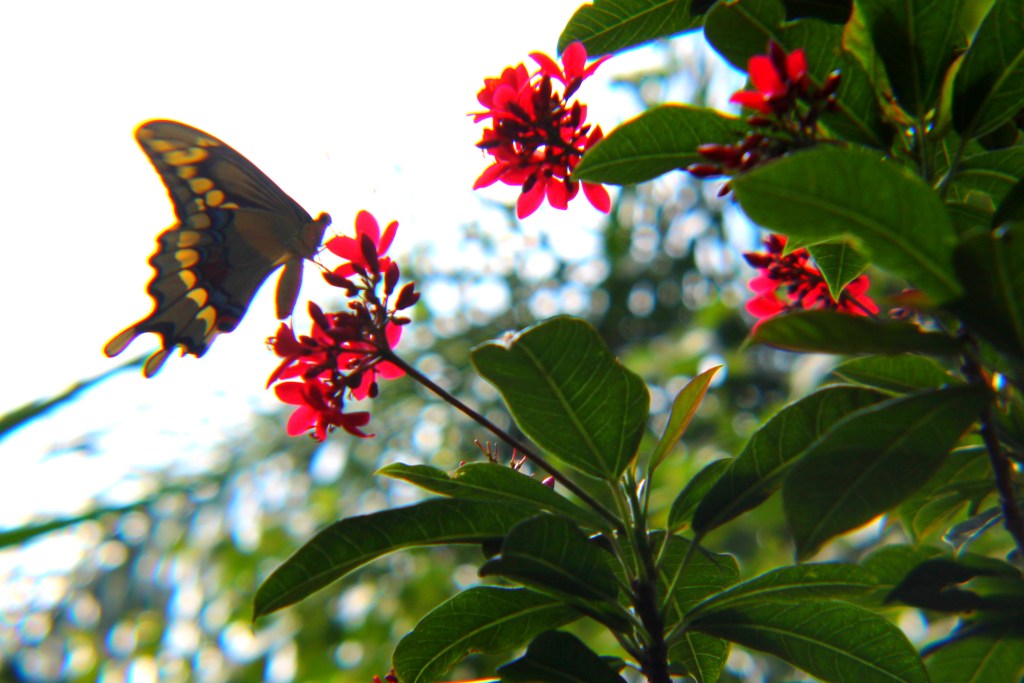
• Provide water for butterflies without letting it become a mosquito breeding area. Refill containers daily or bury a shallow plant saucer to its rim in a sunny area, fill it with coarse pine bark or stones and fill to overflowing with water.
• Share fun facts, such as: a tiny fly (a “midge”) no bigger than a pinhead is responsible for the world’s supply of chocolate; or one out of every three mouthfuls of food we eat is delivered to us by pollinators.
Pollinator Partnership 600 Montgomery Street, STE 440 San Francisco, CA 94111 415-362-1137
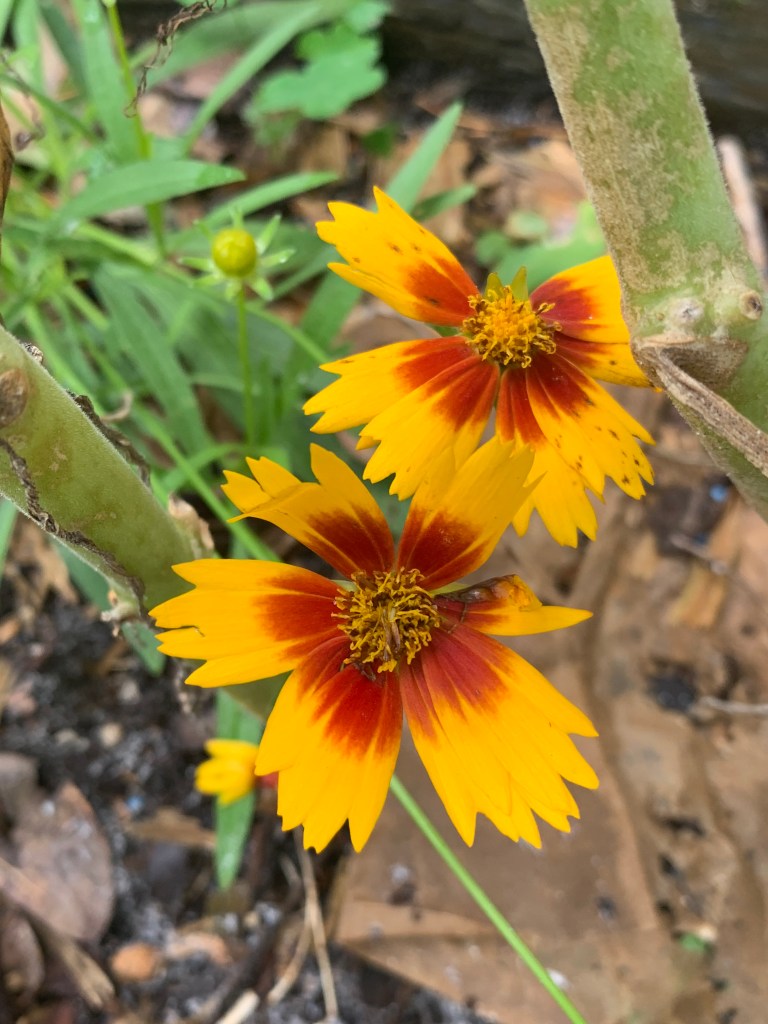
Native vegetation evolved to live with the local climate, soil types, and animals. This long process brings us several gardening advantages. Native plants provide multiple benefits to people and wildlife, while contributing greatly to healthy soil and water in urban and rural areas. Native plants attract a variety of birds, butterflies, and other wildlife by providing diverse habitats and food sources.
In the U.S., approximately 20 million acres of lawn are cultivated, covering more land than any single crop. Unfortunately, there are very few benefits to native wildlife from a manicured lawn. Likewise, gardens that mostly feature non-native species of plants are often of little benefit to wildlife.
Natural landscaping is an opportunity to reestablish diverse native plants, thereby inviting the birds and butterflies back home. By creating a native plant garden, each patch of habitat becomes part of a collective effort to nurture and sustain the living landscape for birds and other animals.
A native plant garden or large planting with a diversity of trees, shrubs, perennials, and grasses provides food and shelter for insects, birds, amphibians, and mammals throughout the growing season.
Leaving seed heads and plant structure throughout winter provides continuing food and shelter for many creatures and provides opportunities to observe nature up close. To underscore the importance of native plants to birds, virtually all terrestrial birds feed their young insects. Native plants provide food for insects, and insects provide food for birds. With no insects, we would have no birds.
Native wildflowers, flowering vines, shrubs, and trees offer a wide range of colors, textures and forms to create dynamic seasonal displays. Grasses and sedges have interesting flowers and seed heads and yellow–orange fall color. Shrubs and trees have fall color and berries that persist into the winter. Choosing a wide assortment of plants ensures seasonal interest, with the bonus of attracting colorful birds, butterflies and insects.

Some of the many benefits of native plantings are:

8 Native Flowers that Grow in Florida
Learn more by coming back to DeltonaGardenClub.com

Here in Volusia County, summer is approaching, and we know there’s nothing quite like summer fun—so our flamingo flock is helping us take the summer off—from fertilizing, that is! Let’s hear it directly from them: Here are the top ways to
Be Floridian Now this summer!
Read more about Volusia County’s fertilizer ban at www.BeFloridianNow.org or Volusia.org/BeFloridianNow.
1. Skip the Fertilizer: The first thing you can do to protect our fun, and our water quality, is to skip the fertilizer during the summer rainy season, from June 1 through September 30. Summer rain showers wash fertilizer into our waterways, causing toxic algae blooms and fish kills. Volusia County has a fertilizer ban on nitrogen and phosphorus—the first two numbers on the fertilizer bag—from June 1 through September 30. During this time, residents and lawn care companies may not apply nitrogen or phosphorus to lawns or landscape plants.
2. Twice is Nice: Use at least 50% slow-release nitrogen, once in the spring and once in the fall. This will carry your plants through the rainy season, without posing an extra risk to our water bodies. And don’t forget to skip the phosphorus year-round without a proven deficiency. For more information on how to read a fertilizer label, go to www.Volusia.org/BeFloridianNow or www.BeFloridianNow.org.
3. Be on your Guard: If you choose to fertilize with 50% or more slow-release fertilizer, make sure there is a deflector shield or edge guard on your fertilizer spreader so you can spread it only where you need it. If you do make a mistake, brush any stray granules back onto your landscaping. Driveways, sidewalks and streets lead to storm drains, which lead to water bodies.
4. Get Buffer: Keep your fertilizer at least 15 feet away from any body of water, as required by Volusia County’s fertilizer ordinance. While you’re giving your waterways some distance, why not plan for a low-maintenance buffer zone around your waterfront? Whether they’re on the bank or in the water, low-maintenance zones can include native or Florida friendly plants, which require NO fertilizer or irrigation once they are established in the right place. They can even help protect your waterway from excess fertilizer runoff. For more information about Florida friendly plants for pond shorelines, see the UF/IFAS Extension’s webpage on the topic here: https://edis.ifas.ufl.edu/ep476.
5. Floridify your Yard: When the Right Plant is in the Right Place, it can reduce or eliminate your need for fertilizer and irrigation. It can also require less overall maintenance, cost less in the long-term, and benefit local wildlife. Native and Florida friendly plants can be sustainable turf alternatives. As you plan, you can call a nursery near you and ask about availability of native or Florida friendly plants. For some common native plants for Florida yards, check out these resources: https://befloridiannow.org/floridifying/.
6. Raise the Blade: When you mow your lawn, raising the blade on your mower makes the grass that is in your landscape stronger and more capable of finding its own nutrients and water in the soil. Remember, grasses are plants, too! Mowing too short stresses the grass and makes it more vulnerable to disease and pests. For more information about good mowing practices, visit the UF/IFAS Gardening Solutions site at https://gardeningsolutions.ifas.ufl.edu/lawns/lawn-care/mowing-your-florida-lawn.html.
7. Keep the Clippings: Keep grass clippings on your landscape, because they contain nitrogen! Nitrogen can contribute to nutrient pollution if it runs off your lawn, but clippings left on your landscape will break down and feed your lawn. It’s free fertilizer! For more information about “grass-cycling,” and for recommended mowing heights, see the UF/IFAS Extension webpage on the topic: https://sfyl.ifas.ufl.edu/sarasota/natural-resources/waste-reduction/composting/what-is-composting/what-can-be-composted/grass-cycling/.
8. Save the Water (bill): Only water your landscape if your plants are showing signs of stress, like if the leaves of your plants are curling, or you can see footprints in your lawn. Otherwise, keep your distance! You may be surprised to find that they might not need your help as often as you think they do, especially if you have the Right Plant in the Right Place! IF YOU MUST water, do so efficiently. Be sure that it has not rained in a while, and that rain is not scheduled in the forecast. Keep an eye on your system, and make sure your sprinkler heads are pointing in the right direction – not watering the sidewalk!
Know your watering day/s, and know where your shut-off valve is, in case you need to get involved in the process. See this link for more information about watering days in Volusia County: https://www.volusia.org/services/growth-and-resource-management/environmental-management/natural-resources/water-conservation/.
Shared courtesy of Volusia.org/BeFloridianNow
Eastern Tiger Swallowtails

When you see a large, showy butterfly flitting around your garden, a roadside, fields or woodsd, take a closer look. It may be an Eastern Tiger Swallowtail(Papilio glaucus), which is a native in eastern North America. It’s at home in Florida, except the Florida Keys.
From February to November, these butterflies feed on nectar from sturdy plants, particularly those that have “red or pink” flowers. Look for adults with a wing span of 3.1 to 5.5 inches. Males are yellow with four black stripes on their forewings. Females may be yellow or black. The yellow females have a band of blue spots along their hind wings. Black females do not have distinguishing markings, they are just dark.
These dark females may be a species preservation mechanism as some predators will avoid them, thinking they are another form of swallowtail that is poisonous.
Eastern Tiger Swallowtail – Yellow

Adult Eastern Tiger Swallowtails live about a month. They are loners and are frequently observed flying above the tree tops. Males pursue females by frequenting areas that contain the kinds of plants on which females prefer to lay their eggs. To attract or tempt the females, the males release a pheromone that encourages mating. While courting, the butterflies engage in a ritual mating dance, fluttering their wings around each other before they land and mate.

Two to three broods may be produced each year in our area. Trees and shrubs of the Magnoliaceae (magnolia) and Rosaceae plant families are the favorite host plants on which the females lay their green eggs.
As the young caterpillars develop, they are brown and white. Then change to green with black, yellow and blue spots on the thorax. The caterpillar then goes into a resting stage, forming a chrysalis from which the butterfly will emerge

Milk, it does the body good.
But did you know it may also be good for the garden? Using milk as fertilizer has been an old-time remedy in the garden for many generations. In addition to helping with plant growth, feeding plants with milk can also alleviate many issues in the garden, from calcium deficiencies to viruses and powdery mildew.
Let’s find out how to take advantage of the beneficial fertilizer components in milk.
Milk Fertilizer Benefits
Milk is a good source of calcium, not only for humans, but for plants as well. Raw, or unpasteurized, cow’s milk has some of the same nourishing properties for plants that it has for animals and people. It contains beneficial proteins, vitamin B and sugars that are good for plants, improving their overall health and crop yields. The microbes that feed on the fertilizer components of milk are also beneficial to the soil. Like us, plants use calcium for growth.

A lack of calcium is indicated when plants look stunted and don’t grow to their full potential. Blossom end rot, which is commonly seen in squash, tomatoes and peppers, is caused by a calcium deficiency. Feeding plants with milk ensures they will get enough moisture and calcium.
Feeding plants with milk has been used with varying effectiveness in pesticide applications, especially with aphids. Perhaps the best use of milk has been in reducing the transmission of mosaic leaf viruses such as tobacco mosaic.
Milk has been used as an effective antifungal agent, specifically in the prevention of powdery mildew.
Drawbacks to Feeding Plants with Milk
Along with the benefits of using milk fertilizer, one must include its drawbacks.
These include:
•Using too much milk isn’t a good idea since the bacteria in it will spoil, resulting in a foul odor and wilty, poor growth.
•The fat in milk can produce unpleasant odors as it breaks down as well.
•The benign fungal organisms that colonize leaves and break down milk can be aesthetically unattractive.
Dried skim milk has been reported to induce black rot, soft rot, and Alternaria leaf spot on treated cruciferous crops.
Even with these few drawbacks, it’s plain to see that the benefits far outweigh any downsides.
Using Milk Fertilizer on Plants
So what type of milk can be used as milk fertilizer in the garden?
I like to use milk that is past its date (great way to recycle), but you can use fresh milk, evaporated milk, or even powdered milk as well. It is important that you dilute the milk with water.
Mix a solution of 50 percent milk and 50 percent water. When using milk fertilizer as a foliar spray, add the solution to a spray bottle and apply to plant leaves. The leaves will absorb the milk solution. However, keep in mind that some plants, like tomatoes, are prone to developing fungal diseases if the fertilizer remains on the leaves too long.
If the solution is not being absorbed adequately, you can gently wipe down the leaves with a wet cloth or spray them with water.
Less milk can be used if you have a lot of plants to feed, as with a large garden area. Using a garden hose sprayer is a common method for feeding plants with milk in large gardens, as the flowing water keeps it diluted. Continue spraying until the entire area is coated.
Distribute about 5 gallons of milk per acre or about 1 quart of milk per 20-by-20-foot patch of garden. Allow the milk to soak into the ground. Repeat every few months, or spray once at the beginning of the growing season and again during mid-season.
Alternatively, you can pour the milk mixture around the base of the plants where the roots will gradually absorb the milk. This works well in smaller gardens. You can place the top portion of a 2-liter bottle (upside down) in the soil next to new plants at the beginning of the season. This makes an excellent reservoir for both watering and feeding plants with milk.
Do not treat the area with any form of chemical pesticide or fertilizer after applying milk fertilizer. This can affect the main fertilizer components in milk that actually help the plants—bacteria. While there may be some odor from the decaying bacteria, the aroma should subside after a few days.

If you’re looking for an unusual plant to fill an empty pot, consider Billbergia nutans. Also known as queen’s tears or the friendship plant, this member of the Bromeliaceae family grows almost anywhere in common soil or no soil and with little care. The plant’s nearly indestructible foliage and unusual blooms provide an exotic accent to a deck, doorway or flowerbed.
History and habitat
Billbergia nutans was named for the Swedish botanist, zoologist and anatomist Gustaf Johan Billberg (1772-1844). Nutans means “nodding,” a description for its undulating blooms.
A native of Brazil, Paraguay and Uruguay, this bromeliad is also found in Mexico and Central America, Ecuador, Peru and Argentina. Generally an epiphytic in its native habitat, flourishing on rocks and trees, Queen’s tears also thrives on the subtropical forest floor and in the well-drained soil of gardens or containers. As a ground cover, the plant spreads quickly growing outward from the original rhizome.
This monocot’s thick grasslike grey-green leaves with saw tooth edges and pointed tips present themselves in funnel-shaped rosettes. Each rosette, approximately 12 to 15 leaves, can reach heights of over 15 inches. Once a year, in springtime, a long arching pink stem emerges from the rosette’s center bearing one of the most striking of floral color combinations I’ve ever seen.
Must-see-to-believe blooms
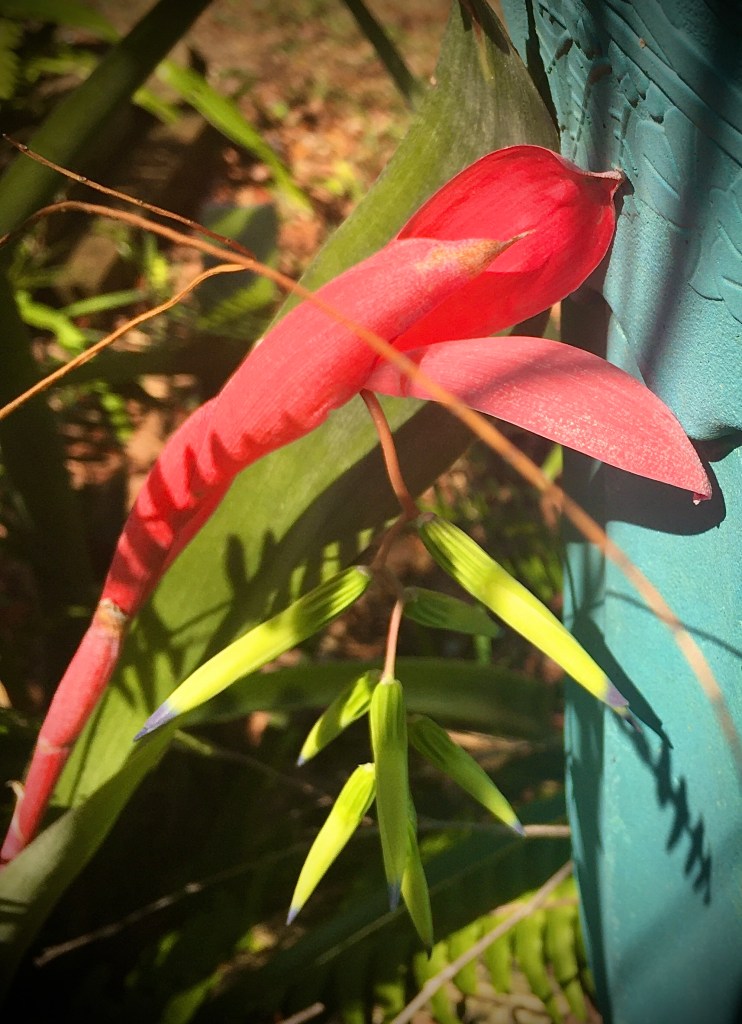
Imagine this long arching pink stem topped with day-glo reddish pink pendant bracts bursting with flowers.
And that’s not all.
The blooms hang in clusters, tubular in form, with three backward curved pink sepals with violet-blue margins, three reflexed lime-green petals outlined in navy blue to purple, and six protruding stamens one inch long with bright yellow anthers.
The blooms exude nectar. Sticky and clear, these visible droplets are often described as “weeping,” which occurs when the plant is touched or moved. These “tears” in combination with the purple color of royalty that outlines the lime-green petals, is the reason for its common name queen’s tears. Since this bromeliad readily produces new offsets called “pups” that are dividable from the original plant and easily shared. If you are fortunate to receive “a start” from a friend, remember that most Billbergia nutans need two to three years to mature before flowering.
Easy-care tips
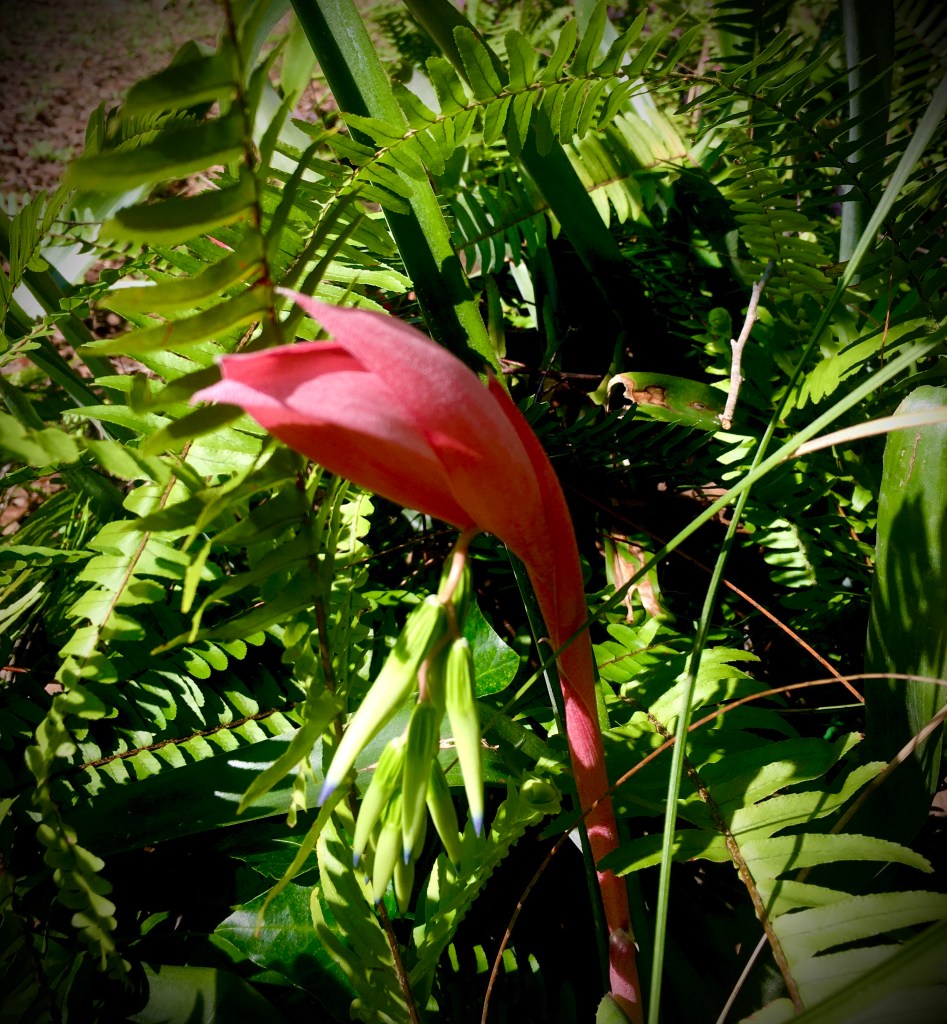
Tolerant of drought, queen’s tears can survive months without water. This plant obtains moisture and nutrients from rain or overhead watering or misting, not from the roots. If you place your plant in a pot with a saucer, do not allow water to accumulate in the saucer, which leads to root rot. Use regular garden soil or planting soil and keep the soil slightly dry. Repot and/or divide when the rosettes overgrow their container. Billbergia nutans prefers partial shade and can scorch in full sun. A location beneath an overhang or tree is best.
Queen’s tears is hardy for USDA Zones 8-11. My plant, which I obtained as an offset from a friend, grows outdoors in a pot – a sturdy survivor of several Vacaville winters.
Launa Herrmann is a Master Gardener with the University of California Cooperative Extension office in Fairfield. If you have gardening questions, call the Master Gardener’s office at 784-1322.
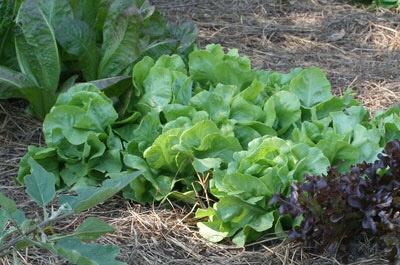
Late Fall into Winter is the perfect time to grow lettuce in Florida.
Lettuce comes in four major types: crisphead, butterhead, leaf and romaine. All can be grown in Florida, but leaf lettuce often works best since it’s more suited to our mild climate and can be harvested throughout the season.

Good leaf lettuce selections for Florida include ‘Black-seeded Simpson’, ‘Red Sails’ and many Salad Bowl varieties.
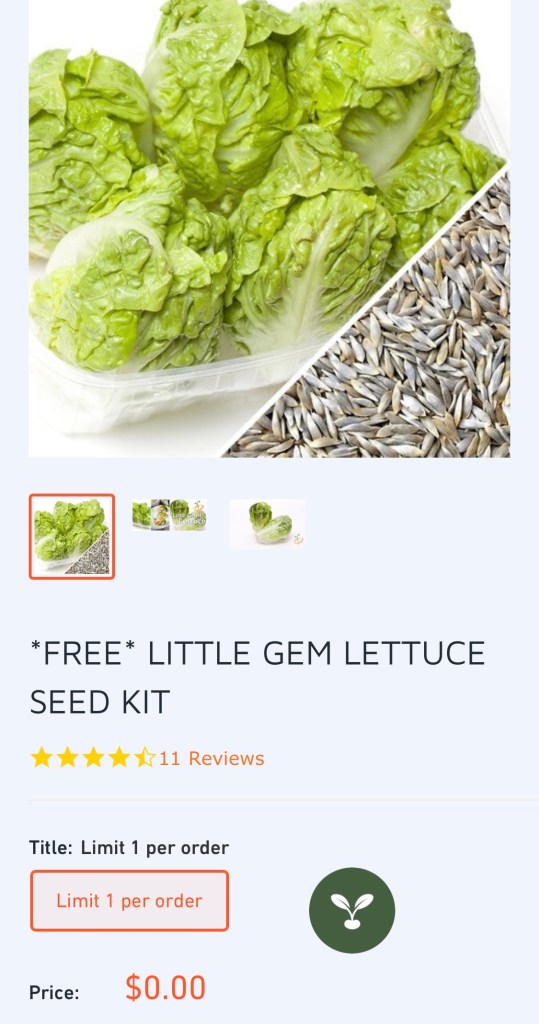
You can start yours from seed or purchase transplants. Try planting in the ground, in containers, or even in a floating hydroponic garden. When you should plant depends on where you live, so check with your local Extension office for exact planting dates.
With proper watering and care, your lettuce should be ready to harvest within a few months of planting.
https://gardeningsolutions.ifas.ufl.edu/plants/edibles/vegetables/lettuce.html
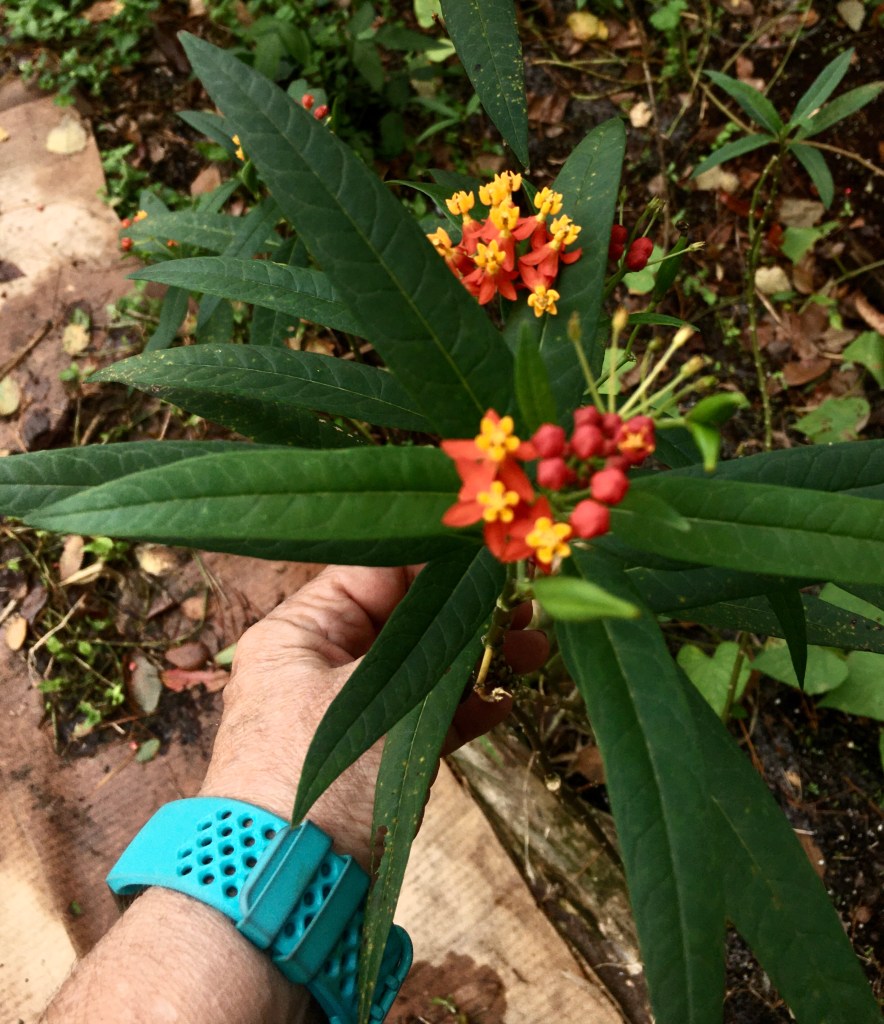
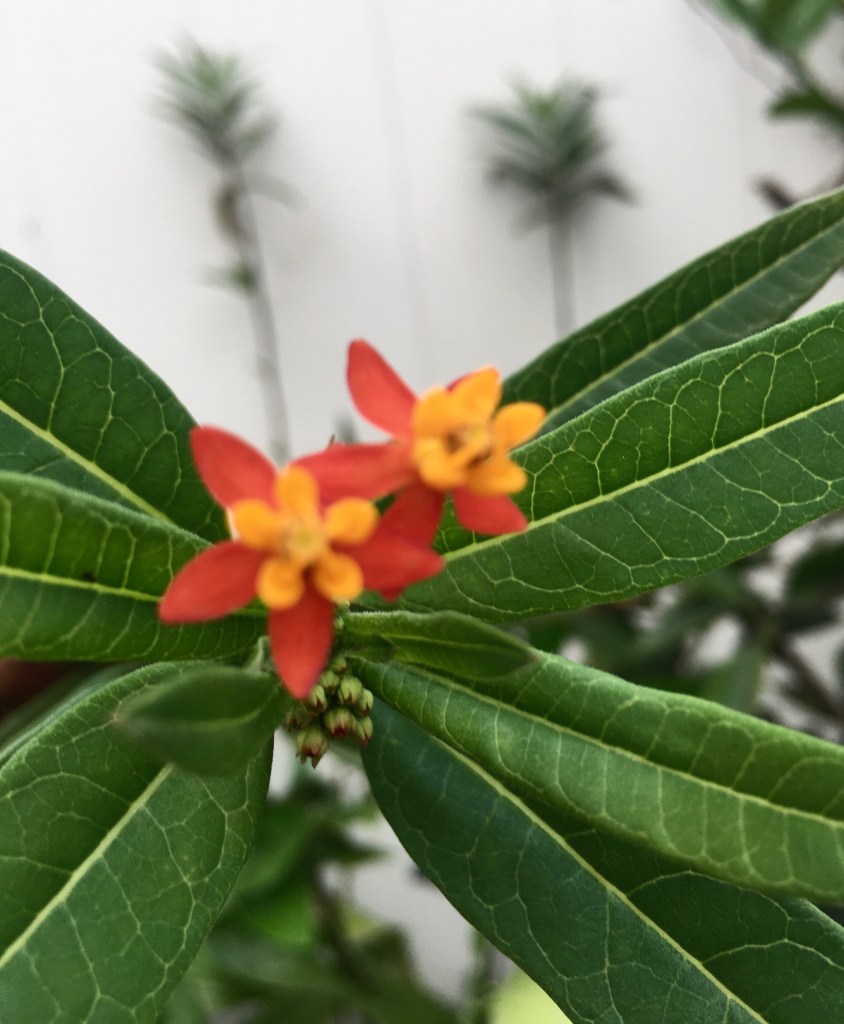
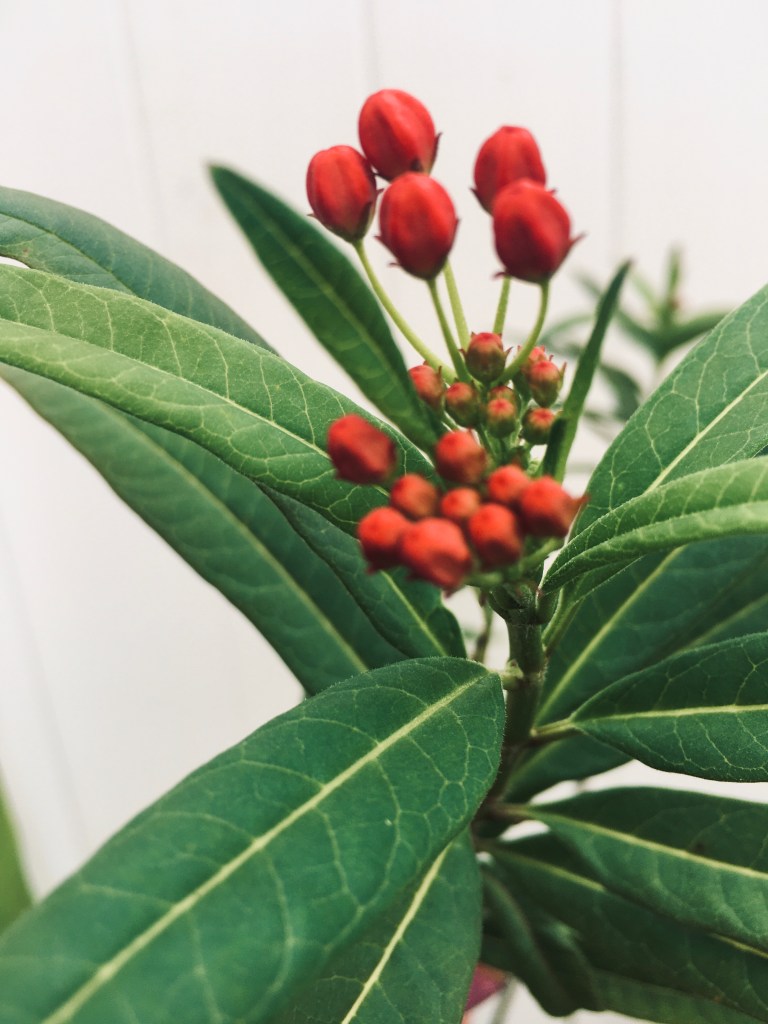
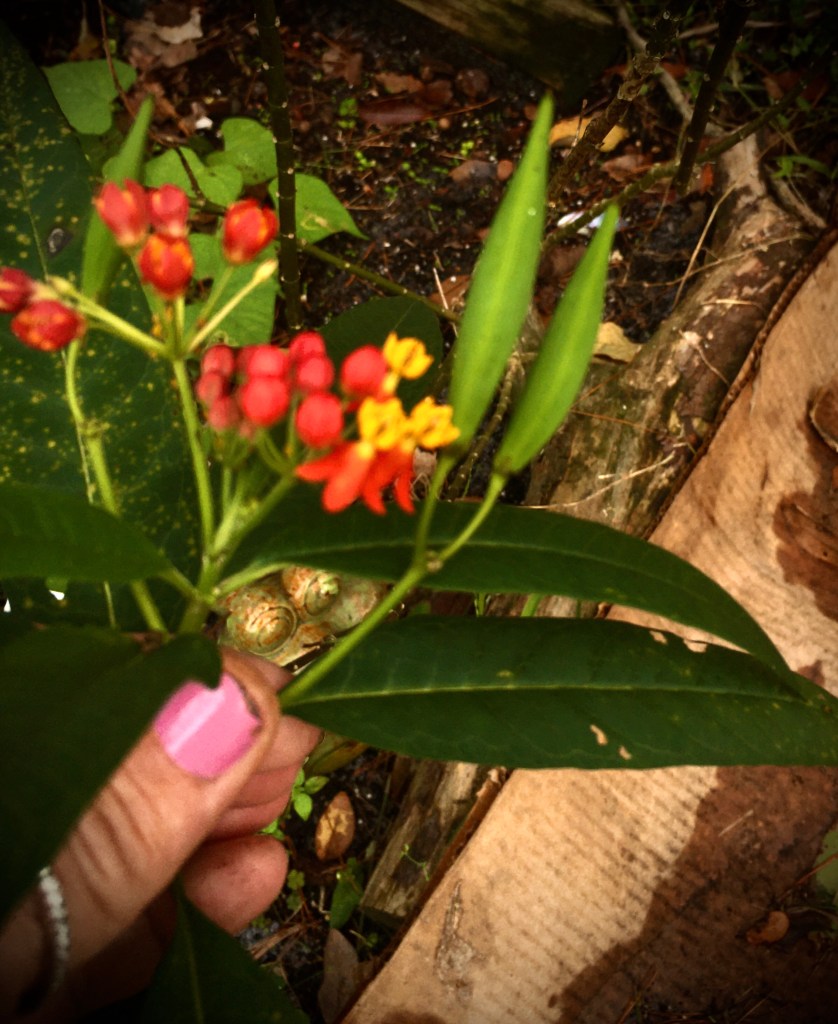
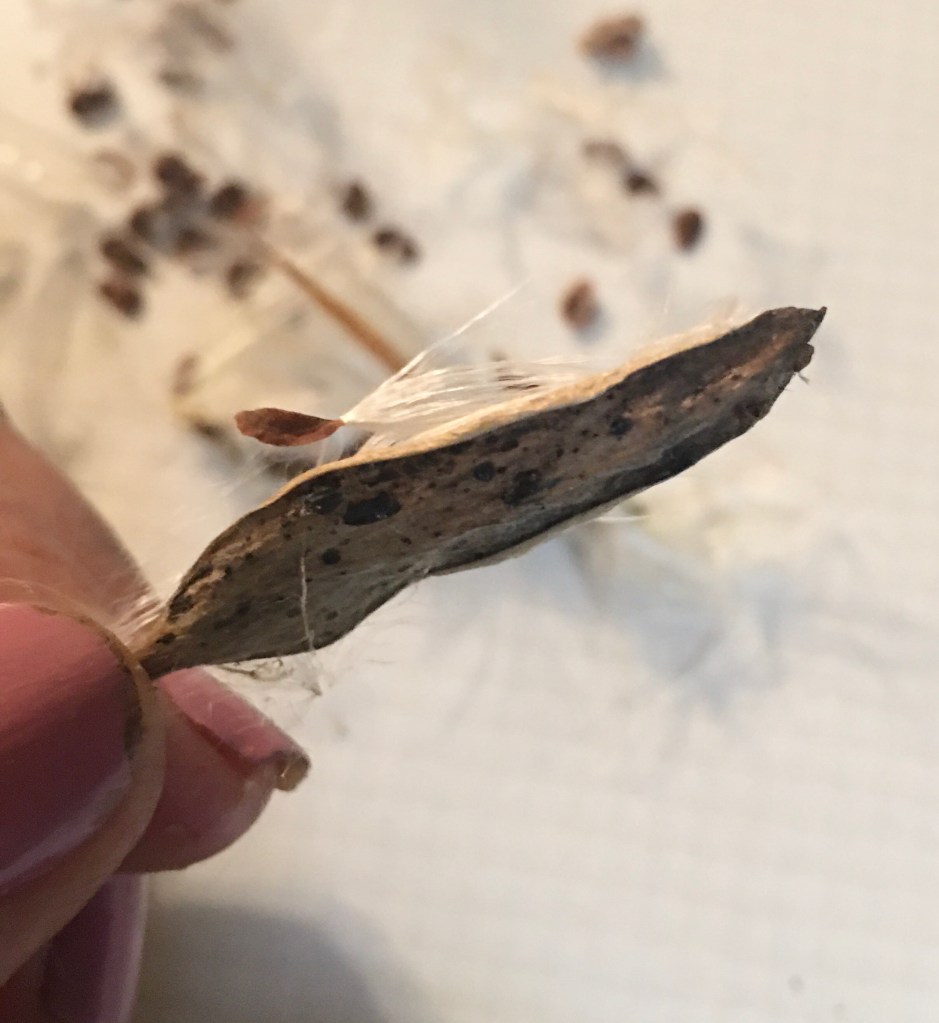


Zen with a Monarch on Milkweed
 Deltona Garden Community
