What’s eating your plants?

This creature has no business in the garden, yard or earth!!!

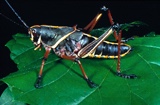
Eastern Looper ☠️☠️☠️

They devoured an entire blueberry bush overnight.

Look closely at missing leaves on plants and see if these deadly bugs are present.

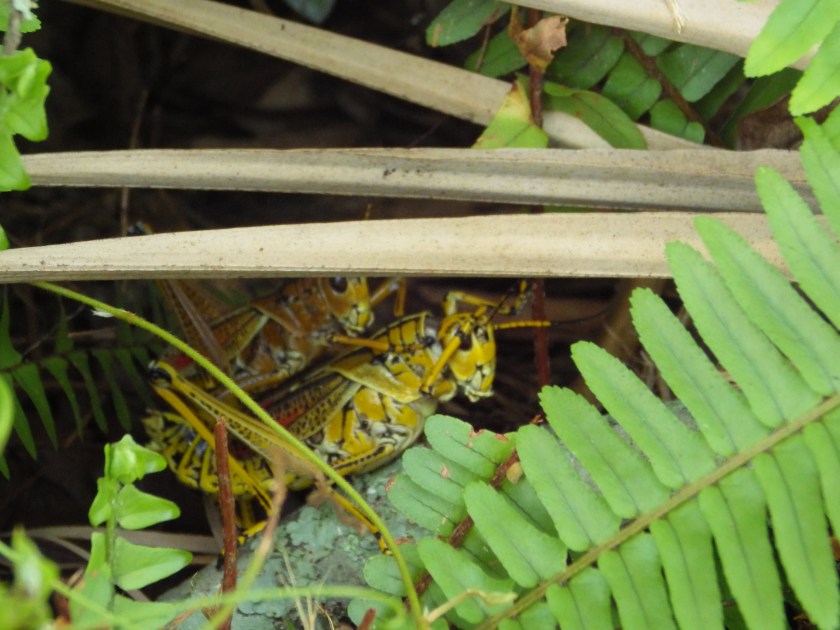
I went out to the garden and saw little groups of black grasshoppers. I noticed at least 40 black and orange striped ones and others yellow stripe. The stripe is on the top backs. After looking more closely, I saw two larger grasshoppers solid black. I believe this is two stages of growth because next phase probably devours the plants.

The “Eastern Lubber” is not beneficial to anything except mice. They have no other natural predators except rodents. We trapped 13 mice and now have the hoppers! Food chain disruption? Likely.

They hide well.

I’ve heard the best option is drowning one by one in a bucket of soapy water.

Things to know if you choose the pick and drown method is they stink 🙄.

So there it goes, I invited my own problems! The Eastern Lubber is attracted to moisture AND you guessed it, the *Orange Amaryllis’. Don’t worry, when they run out of food and moisture they should leave.

Read more about the destruction this pests has caused throughout Florida. Unfortunately pesticide is something we may have to use. Water level rise has pushed creatures out of habitats. I believe “Natural” FLORIDA is making a comeback!

Read more at http://sfyl.ifas.ufl.edu/archive/hot_topics/agriculture/eastern_lubber_grasshopper.shtml

Also be aware of winged moths looking insects-

Leaf Hoppers

Leaf hoppers are small, winged insects are one-fourth of an inch long and are green or brown in color. Some more distinctive specimens can be colored red and green. The adults cut tiny gashes into blueberry leaf stems and insert their eggs into the cuts. The insects are carriers of a blueberry disease known as blueberry stunt mycoplasma.

Wildflower Butterfly Garden

A quick walk through the garden this time of year, before Easter, is always a sign of hope and joy.

A sign, “if you see it”, that better days are not just coming, they are here!

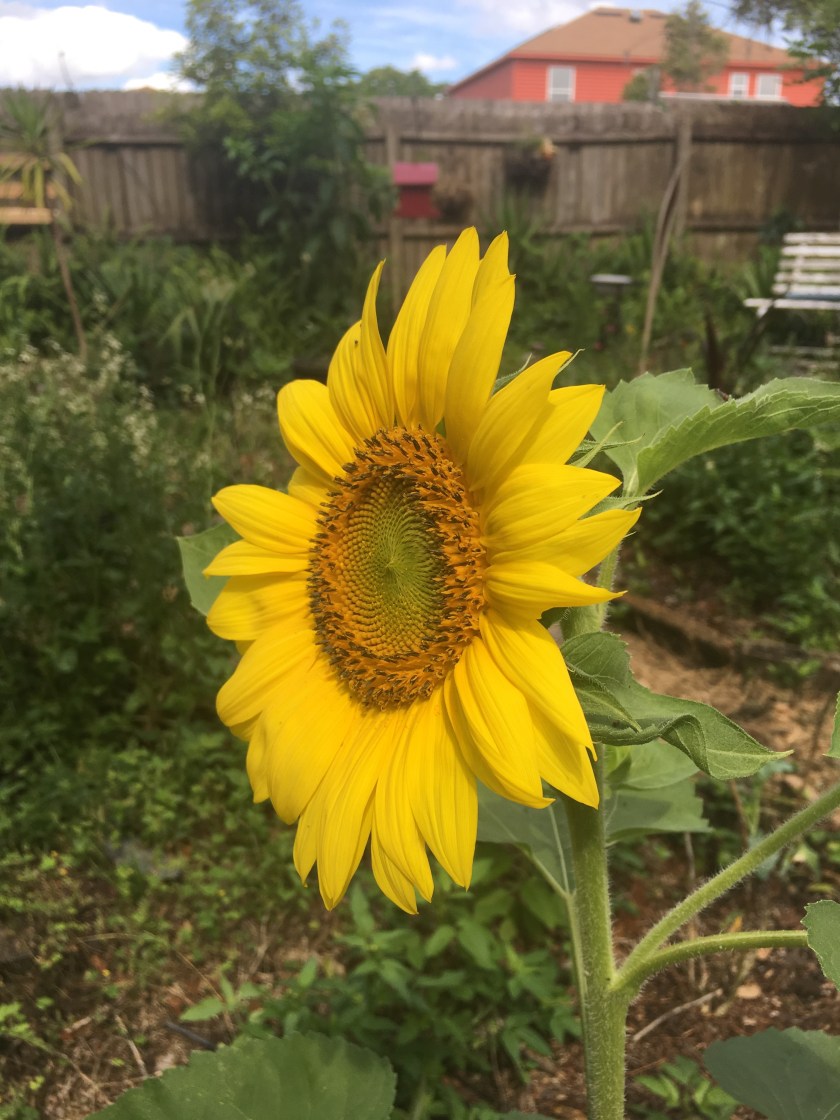
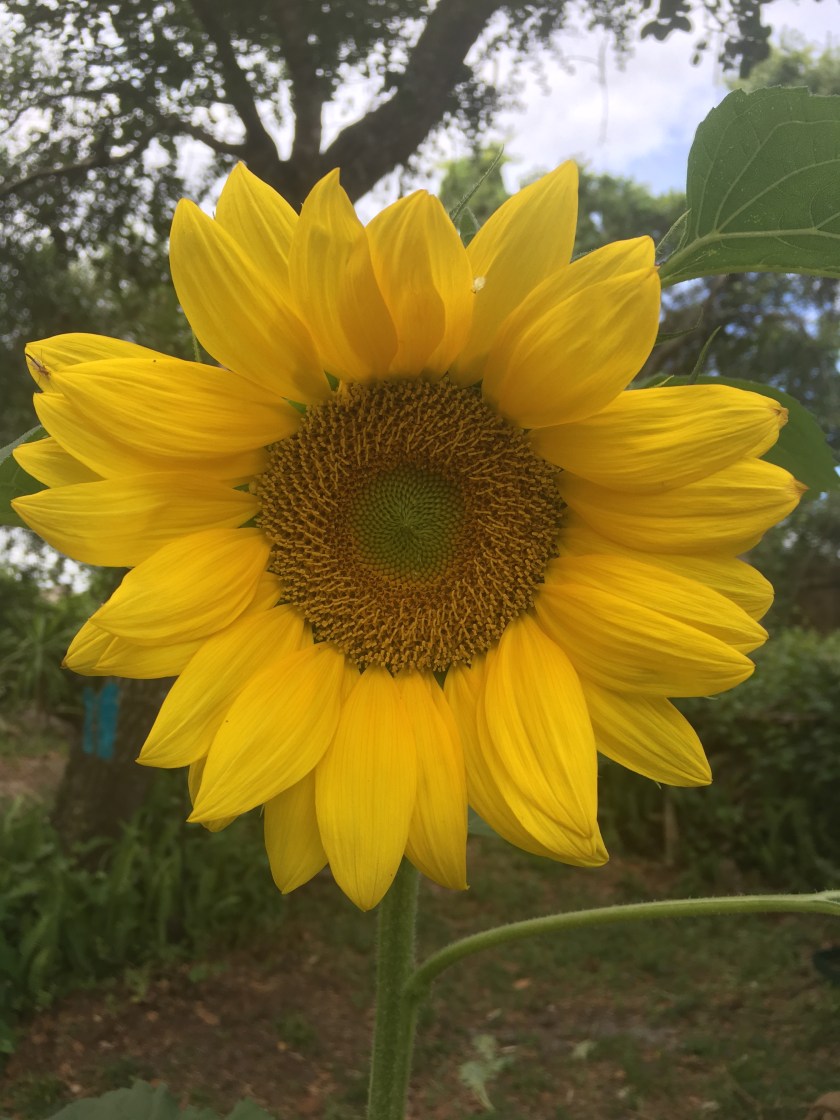
Sunflower I consider wild since I didn’t plant it. 🌻

“Bloom where you’re planted!”

Cover plants help keep soil from drying out roots 🌱

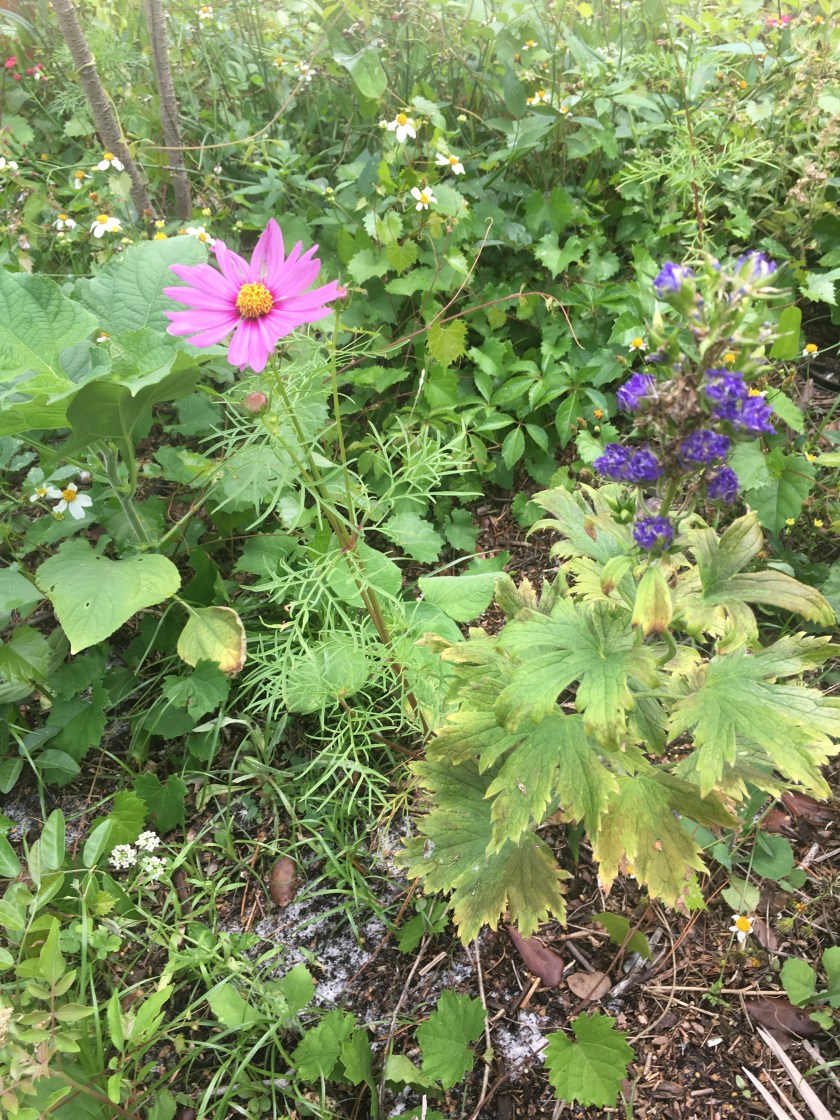
Cosmos love it here

“Born to be wild”

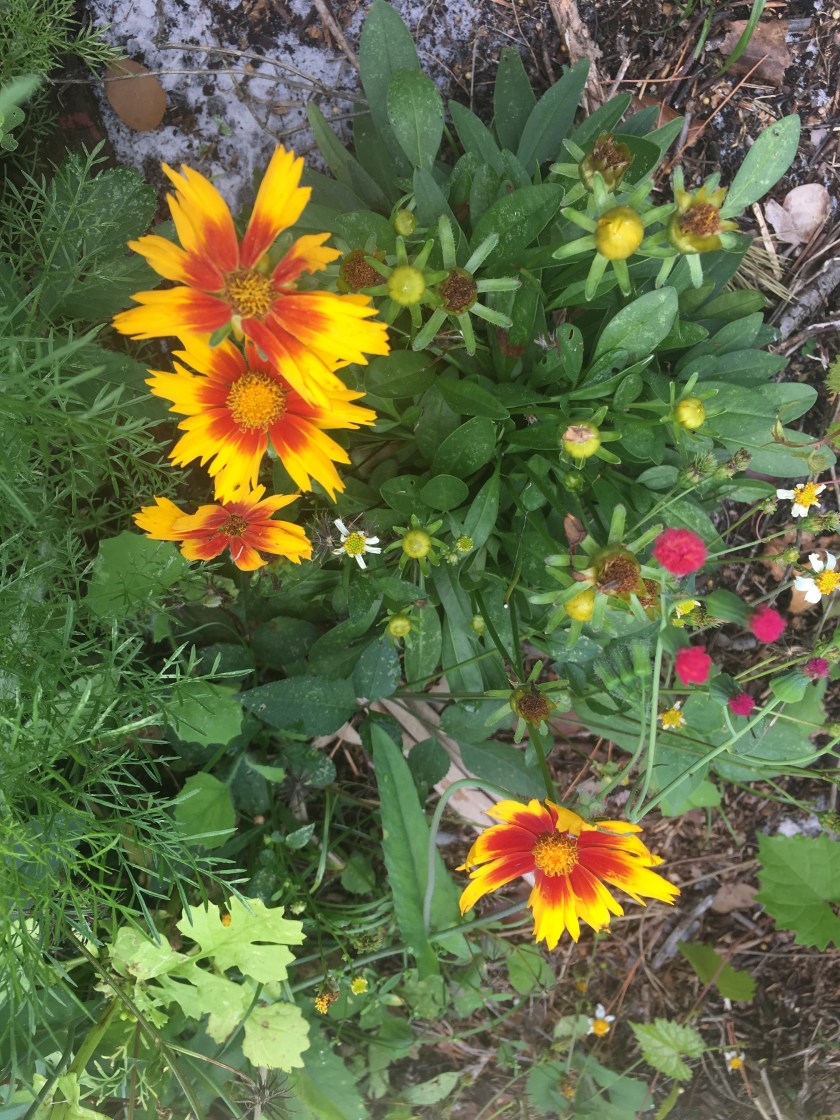
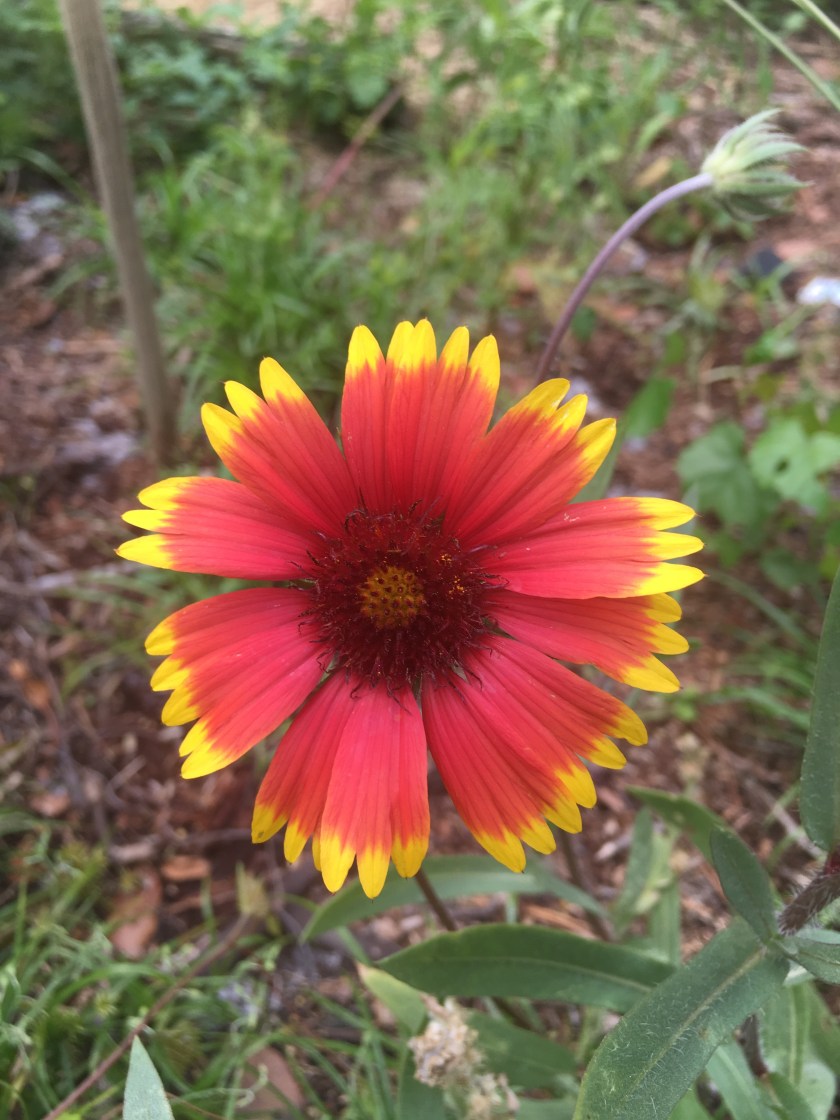
Blanket Flowers are beautiful

Have a sun sun sunny day 🌼

Biblical Herbs: Mints in the Bible

by Herb Exchange

Plants are first mentioned in the Bible in the first chapter of the first book: “Then God said, ‘Let the earth bring forth grass, the herb that yields seed, and the fruit tree that yields fruit according to its kind…” (Genesis 1:11). Throughout the ages, the Hebrews have attributed holiness to many species of plants. The Scriptures associate feasts, rites and commandments with many plants and their cultivation. Early written information about herbs is found in the Bible back to the time of Moses or even earlier. In Exodus 12:22 Moses tells the children of Israel how to save their children by using the herb and lamb’s blood. “And you shall take a bunch of hyssop, dip it in the blood that is in the basin, and strike the lintel and the two doorposts with the blood that is in the basin.” In Numbers 19:6, 18 hyssop is again mentioned. Also, in 1 Kings 4:33 God gave Solomon wisdom, “And he (Solomon)spoke of trees, from the cedar tree of Lebanon even to the hyssop that springs out of the wall…” Psalms 51:7 refers to this plant: “Purge me with hyssop, and I shall be clean; wash me, and I shall be whiter than snow.” While pride is symbolized by the majestic cedar of Lebanon in Jewish tradition, the lowly hyssop represents modesty and humility. At least eighteen plants have been considered for the hyssop of the Bible, but modern botanists have generally agreed that Syrian majoram (Origanum syriacum) is the likely plant. It seems to fit well with these verses. It was used to cleanse homes defiled by leprosy or death and came to symbolize cleanliness. Its fragrance and taste led it to be prized by the ancient Romans and the Greeks before them. Bridges and grooms wore crowns made of marjoram. It was also quite likely prized in the kitchen, as it is now.

Herbs of the Bible

In the New Testament a sponge soaked in sour wine or vinegar was stuck on a branch of hyssop and offered to Jesus of Nazareth on the cross (John 19:29). Hyssop-Oregano was often gathered in bunches and used as a brush or sprinkler for Jewish purification rituals.

Hyssop, Bible Psalms 51:7

Mint (Mentha longifolia) or horsemint is thought by many Jewish scholars to be the mint referenced by Jesus in Matthew 23:23 and Luke 11:42 in His discourse with the Pharisees. It along with anise or dill and cumin grow wild in parts of Palestine, mint being the most common. The Pharisee taxed himself lightly if he paid the tithe of mint, for it was too common and too easily cultivated to be of much worth, even though it was valuable as a medicinal herb. It was one of the plants subjected to the ban on sowing and gathering every seventh year. Jesus’ lesson on hyprocrisy is told by Matthew and again by Luke, and mint is the one herb mentioned by both. The Greek word Heduosmos, or mintha, means “having a sweet smell” and refers to “a sweet-smelling herb or mint.” The plant derives its name from Mintha, a Greek nymph who was transformed into the herb by Persephone after Persephone learned that her husband, Pluto had loved the nymph. Several varieties of mint grew in Israel, but horsemint is the most common and probably the one referred to by Matthew and Luke. Horsemint is still found today in the Holy Land and is cultivated at Aleppo in Syria. It is much larger than the other mints, reaching a height of three feet or more, with lilac flowers. It grows in moist, sunny places where it tends to run wild. It has been confused with Mentha spicata, or spearmint. The Hebrews used mint as a strewing herb at home and in the Temple, prizing its clean and aromatic scent. They served mint at the Spring Passover Feast of the Paschal Lamb, and today it is one of the “bitter herbs” of the paschal feast.

Bible Herbs: Genesis 1:11

In Israel the branched inflorescence of the Salvia dominica is one of the several salvias thought to have inspired the design of the menorah, seven-branched candelabra, or lampstand. Other scholars believe Judean sage (Salvia judaica) may have been in view. Judaica is from the Hebrew Yehudah, or Judah, the name given to the mountainous southern part of the land of Israel. The Bible describes God’s instructions to Bezalel of the tribe of Judah, one of Moses’ Israelites, to make an ark, altar and table of acacia wood: And he made the lampstand of pure gold; of hammered work he made the lampstand. Its shaft, its branches, its bowls, its ornamental knobs, and its flowers were of the same piece…” (Exodus 37:17). Sage had already proven its value as both a flavoring and a medicine, so it is hardly surprising that it appeared in religious symbolism.

(This article was submitted by Randy, and taken from Randy’s book  “Stop…and Smell The Mints”)  For more information go to https://outskirtspress.com/stopandsmellthemints
Free Orange Amaryllis Seeds 😎 and how to find them.

Click on photo to watch video or click link.

After the beautiful blooms, this FLORIDA friendly Amaryllis keeps on giving and giving.

The climate here in Deltona Florida allows for two blooming seasons. Spring and Fall.

If you want to watch how to gather these seeds watch video.

Down the Garden Path Radio

Easy Care Perennials Podcast
🌸
“Listen and surf the web at the same time!”

https://www.iheart.com/podcast/263-Down-The-Garden-Path-Podca-30526563/episode/gardens-plus-easy-care-perennials-30772990/?embed=true

Bottle Gardening

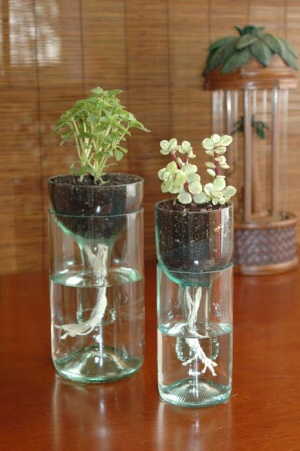
You don’t always need the dirt! Aquaponics intro on a small scale!

I love this idea and it’s been working out well for my personal experiment.

Cut bottle carefully at top. Turn upside down

Water bottles, soda bottles – cut and inverted!

At the moment I am using spring water in small water bottles. It has rained and I’m hoping this added some nitrogen to the water.

Mostly I wanted to try this method with lettuce. The thought of having fresh lettuce available whenever I wanted a salad, was intriguing.

Herbs

I’ve added some spearmint and oregano stems to other bottles.

The spearmint is kept in a hanging pot so I can move away from sun as the sun shifts.

Before my favorite shade tree got its leaves back, the mint got hit with a day of sunshine. I am trying to save it so I took some stems to see if it will root. I’m not exactly confident this approach will work. Soil in the bottles might be best. So far, the mint didn’t die or dry in the water.

Herbs are more shade loving plants throughout the summer. Oregano, basil and rosemary are my “must have” herbs. I can’t remember when a time when I didn’t have these herbs outdoors.

Italian cooking demands fresh ingredients just like the Great Nona’s know best! Oregano grows without much help, other than breaking off a fist full for sauce, which actually prunes it too!!

Rosemary

Rosemary. Ah Rosemary. The most aromatic herb my life and patio just can’t live without. Roast pork anyone? I can smell it roasting for hours in my dreams!!! Brush up against it and the scent fills the air. Place it where animals may also brush by it. Bugs, like fleas, hate rosemary!

Give this easy grower plenty of room. It demands attention and it’s own space to branch out like a tree if you let it.

I would not say Rosemary is a fast grower so start small and repot as needed. I give it 3 times more space in a pot because it will fill in eventually.

It’s that time of year when the ground is warming. Dogs and cats start scratching after they’ve gone outdoors? Besides fleas, Florida has chigger type nuisance bugs you can’t see.

Break off a long twig of rosemary and secure it to the inside of your pets collar! Take the sprigs and rub the plant all over your pet. This is a natural way to relieve itching temporarily. Also works with lavender. In the summertime, I make my own itch relieving spray!!

Put water in a spray bottle along with sprigs of lavender and rosemary. Put in fridge and use to soothe!

Do you have your own herbal remedies?

Stayed tuned for additions to this thread!

“Basil” a religious tradition

Religious Legends

Basil is a part of religious traditions around the world, from Christianity to Hindu.Although there is no mention of basil in the Bible.

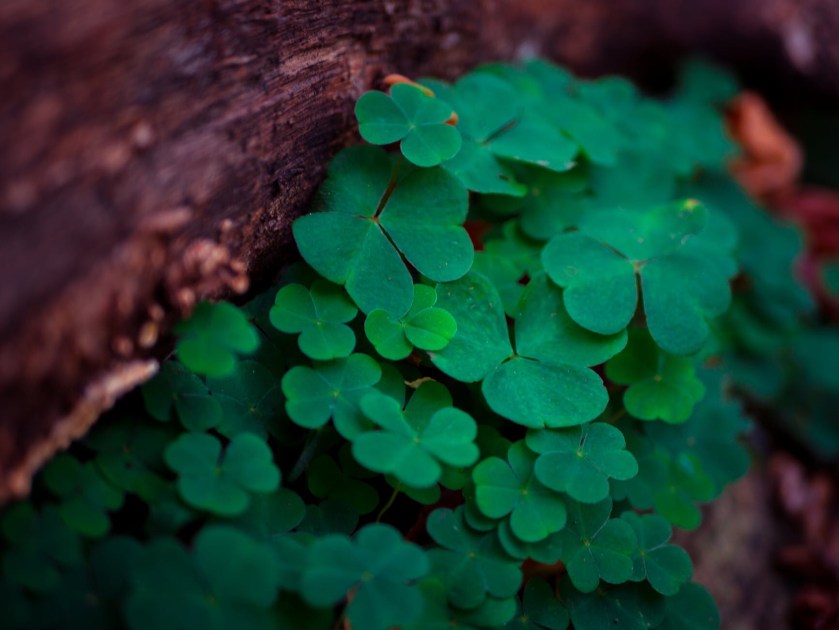
The plant is said to have grown at the site of Christ’s crucifixion and is associated with St. Basil. St. Basil – feast day is celebrated in Greece on January 1 by having basil blessed at church

Holy basil, Ocimum tenuiflorum, is particularly sacred in Hindu tradition. It is thought to be the manifestation of the goddess, Tulasi, and to have grown from her ashes.
There are several versions of the legend, but according to a widely known one, Tulasi was tricked into betraying her husband when she was seduced by the god Vishnu in the guise of her husband.

In her torment, Tulasi killed herself, and Vishnu declared that she would be “worshipped by women for her faithfulness” and would keep women from becoming widows.

Thus, holy basil, which also goes by the common name tulsi, an obvious reference to the goddess, became a Hindu symbol of love, eternal life, purification and protection. In addition to basil’s role in the death of Tulasi in the Hindu legend, basil has played a role in burial rituals and has been grown on graves in various countries.

Basil’s love symbolism isn’t limited to India.
It has been considered an aphrodisiac by some, is associated with the pagan love goddess, Erzuli, and is used in love spells.

In Italy, where sweet basil is called “kiss me Nicholas,” “bacianicola,” it is thought to attract husbands to wives, and a pot of basil on a windowsill is meant to signal a lover.

In Moldavian folklore, if a man accepts a sprig of basil from a woman, he will fall in love with her.

As is typical for its folklore, while being linked to love and attraction, basil has also conversely been associated with chastity.

In Sicilian folklore, basil is associated with both love and death when basil sprouts from the head of isabetta of Messina’s slain lover.

Protection and Luck

Basil is considered a good luck charm in some folklore. It is reportedly used in exorcisms, for protection and to attract wealth.

Language of Flowers

Basil’s symbolism in the Victorian language of flowers also reflects its dual nature. It signifies both hatred (for common basil) and best wishes (for sweet basil).

Join us – at Deltona Garden Club

How to Fight Spider Mites

How to Fight Spider Mites

How to Fight Spider Mites


— Read on www.gardeningchannel.com/how-to-fight-spider-mites/

Top Producing Vegetables and Fruits: These 12 Plants Will Give You Plenty To Share

Top Producing Vegetables and Fruits: These 12 Plants Will Give You Plenty To Share

Top Producing Vegetables and Fruits: These 12 Plants Will Give You Plenty To Share


— Read on www.gardeningchannel.com/most-efficient-top-yielding-vegetables/